

HEALTHCARE IT NEWS & BLOG
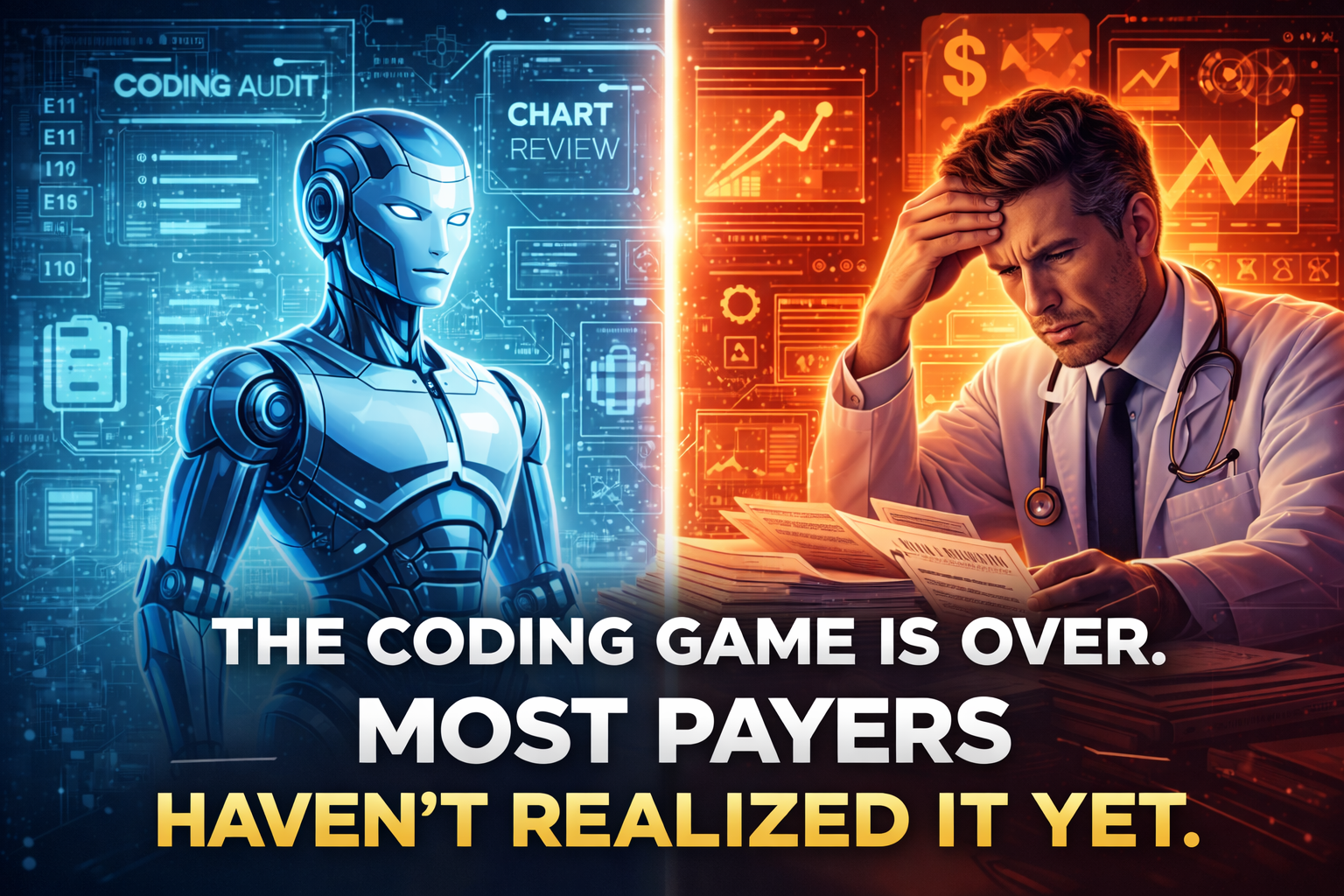
The Coding Game Is Over. Most Payers Haven’t Realized It Yet.
For years, payer growth was driven by how well risk was documented, not how well it was managed. That model is breaking. As pressure builds from regulators, rising costs, and outcomes, coding is no longer the strategy, it is the baseline. The real shift is underway, and it forces a harder question: can payers move beyond capturing risk and actually change it?
For years, payers found a reliable way to grow.
Document more.
Code better.
Capture more risk.
It worked so well that entire operating models were built around it. Vendors scaled. Teams expanded. Technology followed.
Revenue didn’t just come from managing health.
It came from how well you described it.
That model is now breaking.
And most organizations are still playing by the old rules.
What’s changed isn’t subtle.
Oversight on risk adjustment is tightening.
Payment pressure is increasing.
Medical costs are accelerating faster than premium growth.
The result is simple.
You can’t code your way to growth anymore.
This is where the disconnect starts.
Most payer organizations are still optimized for documentation, not outcomes.
They are built around:
Retrospective chart reviews
Coding audits and vendor programs
Documentation capture strategies
All of it designed to make sure nothing is missed.
But nothing about that model actually improves the health of a member.
It just improves how the condition is recorded.
That distinction didn’t matter as much before.
Now it does.
Because growth is shifting.
Not from how well you capture risk.
But from how well you manage it.
And that’s a completely different capability.
It requires identifying risk earlier.
Intervening in real time.
Closing care gaps before they turn into cost.
That’s not a coding function.
That’s operational execution.
Here’s the problem.
You can’t take a system designed to look backward
and expect it to perform looking forward.
The workflows don’t match.
The incentives don’t align.
The infrastructure isn’t there.
And yet, many plans are still trying to stretch documentation engines into clinical ones.
At the same time, the economics are shifting underneath them.
The return on coding optimization is shrinking.
The cost of poor outcomes is rising.
Avoidable admissions.
Chronic disease mismanagement.
Member churn tied to experience.
These aren’t side issues anymore.
They are margin drivers.
This is the part most organizations are underestimating.
Coding is no longer the strategy.
It’s the baseline.
Everyone is expected to get it right.
No one is going to win because of it.
The winners will be the plans that move first.
The ones that shift from retrospective capture
to proactive intervention.
The ones that stop asking, “Did we document it?”
and start asking, “Did we change it?”
Most payer organizations won’t make this shift quickly.
Not because they don’t understand it.
But because their entire operating model is built for something else.
And that’s where the opportunity sits.
The coding game isn’t evolving.
It’s ending.
The only question is how long it takes before your organization realizes it.
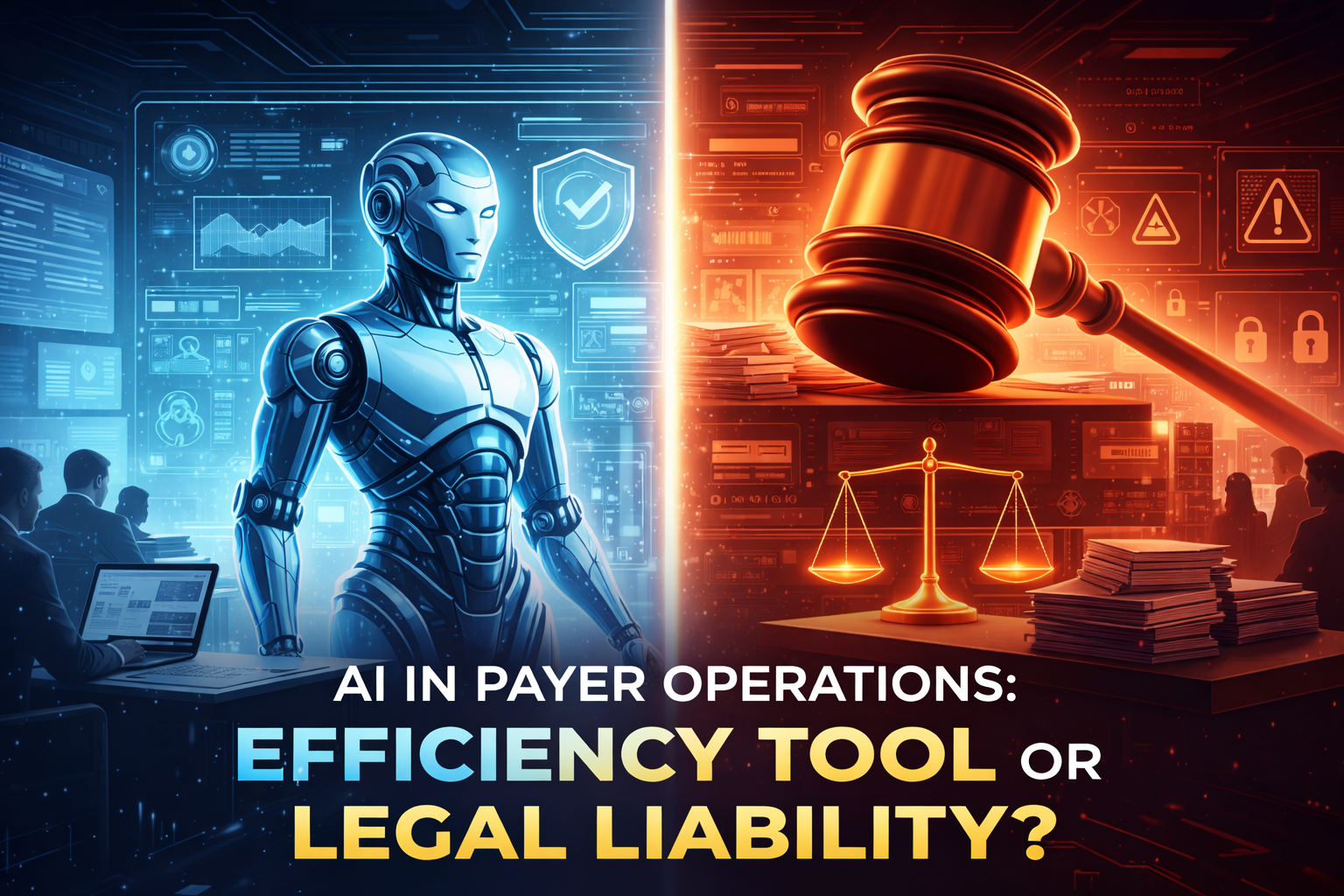
AI in Payer Operations: Efficiency Tool or Legal Liability?
AI is rapidly becoming embedded in core payer operations, driving decisions across claims, prior authorization, and risk adjustment. But as automation increases, so does exposure. The real challenge isn’t adoption—it’s accountability. As AI begins to influence outcomes at scale, payers must confront a critical question: can they explain and defend the decisions their systems are making?
The payer industry is moving fast on AI.
Claims are being automated. Prior authorizations are being streamlined. Risk adjustment is being augmented. Call centers are being replaced with conversational models.
The story everyone is telling is simple.
AI drives efficiency. Efficiency drives margin.
That story is incomplete.
What’s actually happening is this:
AI is moving faster than the controls required to manage it.
And that gap is where the real risk sits.
AI is no longer a support tool. It’s embedded directly into decision-making.
It determines whether a claim is paid.
It influences whether a prior authorization is approved.
It flags what gets reviewed and what gets ignored.
That shift matters.
Because once AI starts making decisions, you’re no longer optimizing workflows.
You’re automating judgment.
And most organizations are not set up to govern that.
There’s a problem building under the surface that few teams are willing to say out loud.
First, accountability starts to break down.
When a decision is driven by an algorithm, ownership becomes unclear.
Was it the plan? The vendor? The model?
In a manual process, responsibility is obvious.
In an automated one, it fragments.
Second, explainability becomes a real issue.
It’s easy to say a model flagged something.
It’s much harder to explain why in a way that stands up to audit, appeal, or legal review.
If you can’t clearly defend a decision, the efficiency you gained becomes irrelevant.
Third, and most important, mistakes scale.
A human makes errors one at a time.
AI makes them thousands at a time.
If the logic is flawed, the impact isn’t contained. It compounds quickly and quietly.
By the time it’s discovered, the exposure is already material.
This is where the industry is headed.
AI-driven decisions are starting to attract scrutiny.
Litigation is emerging.
Regulators are behind, but not indefinitely.
The imbalance is obvious.
Decision velocity is increasing. Oversight is not.
That doesn’t hold for long.
The mistake most payers are making is treating AI like a technology upgrade.
It gets handed to IT.
It gets implemented through a vendor.
It gets measured in terms of cost reduction.
That framing misses the point entirely.
AI in payer operations is not just a technology layer.
It is a decision layer.
And decision layers require control, accountability, and governance.
Right now, many organizations don’t have that foundation in place.
What needs to change is straightforward, but not easy.
Every automated decision needs to be traceable.
Every outcome needs to be explainable.
Every workflow needs to be defensible.
Not in theory. In practice.
Human oversight isn’t going away in high-risk areas.
It just needs to be redesigned around the system, not bolted on after the fact.
AI will continue to expand across payer operations. That’s not the question.
The real divide will be between organizations that deploy it
and organizations that can defend it.
Because the next wave of pressure won’t come from innovation.
It will come from scrutiny.
The question is no longer whether to use AI.
It’s whether your organization can stand behind the decisions it makes when AI is involved.