

HEALTHCARE IT NEWS & BLOG
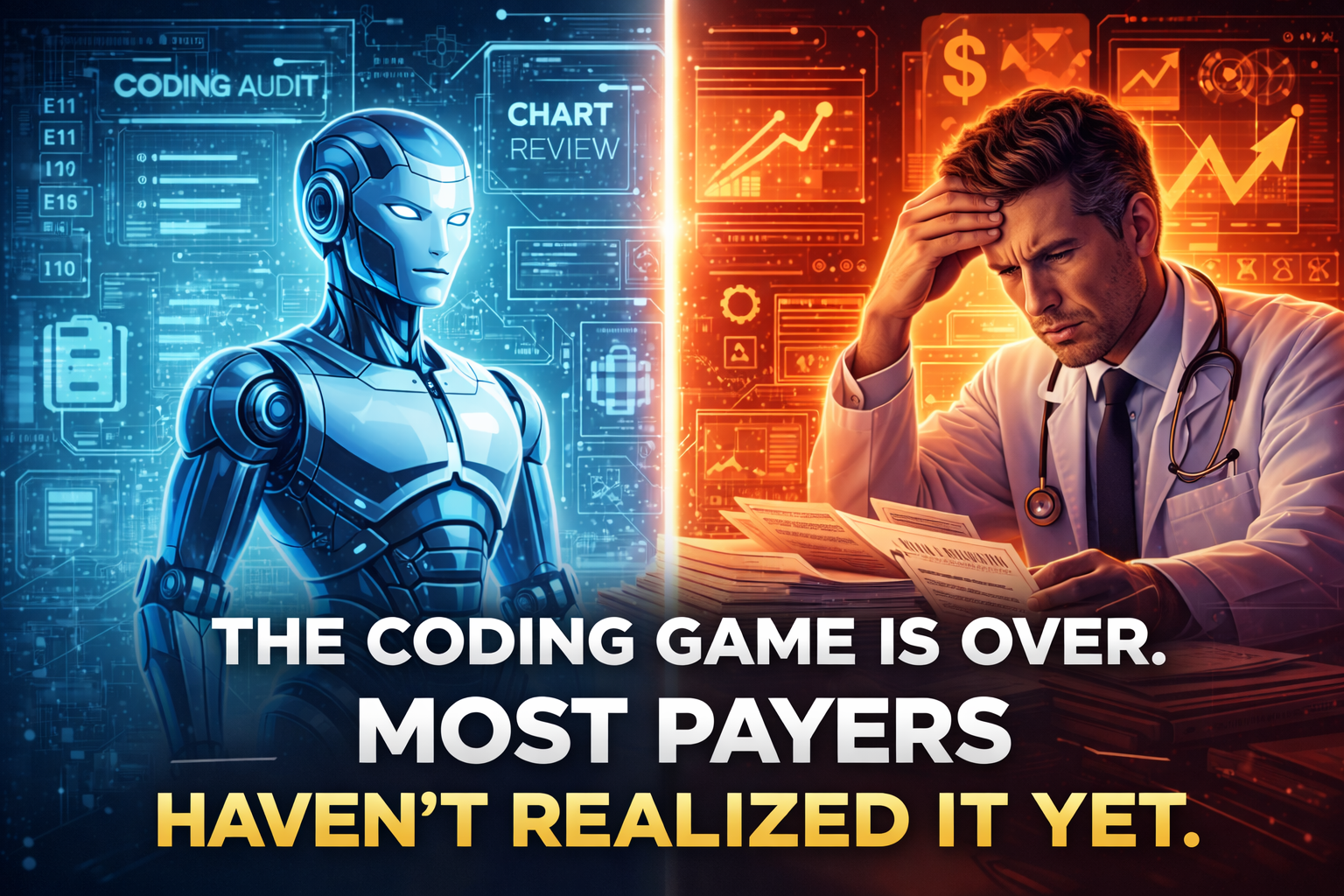
The Coding Game Is Over. Most Payers Haven’t Realized It Yet.
For years, payer growth was driven by how well risk was documented, not how well it was managed. That model is breaking. As pressure builds from regulators, rising costs, and outcomes, coding is no longer the strategy, it is the baseline. The real shift is underway, and it forces a harder question: can payers move beyond capturing risk and actually change it?
For years, payers found a reliable way to grow.
Document more.
Code better.
Capture more risk.
It worked so well that entire operating models were built around it. Vendors scaled. Teams expanded. Technology followed.
Revenue didn’t just come from managing health.
It came from how well you described it.
That model is now breaking.
And most organizations are still playing by the old rules.
What’s changed isn’t subtle.
Oversight on risk adjustment is tightening.
Payment pressure is increasing.
Medical costs are accelerating faster than premium growth.
The result is simple.
You can’t code your way to growth anymore.
This is where the disconnect starts.
Most payer organizations are still optimized for documentation, not outcomes.
They are built around:
Retrospective chart reviews
Coding audits and vendor programs
Documentation capture strategies
All of it designed to make sure nothing is missed.
But nothing about that model actually improves the health of a member.
It just improves how the condition is recorded.
That distinction didn’t matter as much before.
Now it does.
Because growth is shifting.
Not from how well you capture risk.
But from how well you manage it.
And that’s a completely different capability.
It requires identifying risk earlier.
Intervening in real time.
Closing care gaps before they turn into cost.
That’s not a coding function.
That’s operational execution.
Here’s the problem.
You can’t take a system designed to look backward
and expect it to perform looking forward.
The workflows don’t match.
The incentives don’t align.
The infrastructure isn’t there.
And yet, many plans are still trying to stretch documentation engines into clinical ones.
At the same time, the economics are shifting underneath them.
The return on coding optimization is shrinking.
The cost of poor outcomes is rising.
Avoidable admissions.
Chronic disease mismanagement.
Member churn tied to experience.
These aren’t side issues anymore.
They are margin drivers.
This is the part most organizations are underestimating.
Coding is no longer the strategy.
It’s the baseline.
Everyone is expected to get it right.
No one is going to win because of it.
The winners will be the plans that move first.
The ones that shift from retrospective capture
to proactive intervention.
The ones that stop asking, “Did we document it?”
and start asking, “Did we change it?”
Most payer organizations won’t make this shift quickly.
Not because they don’t understand it.
But because their entire operating model is built for something else.
And that’s where the opportunity sits.
The coding game isn’t evolving.
It’s ending.
The only question is how long it takes before your organization realizes it.
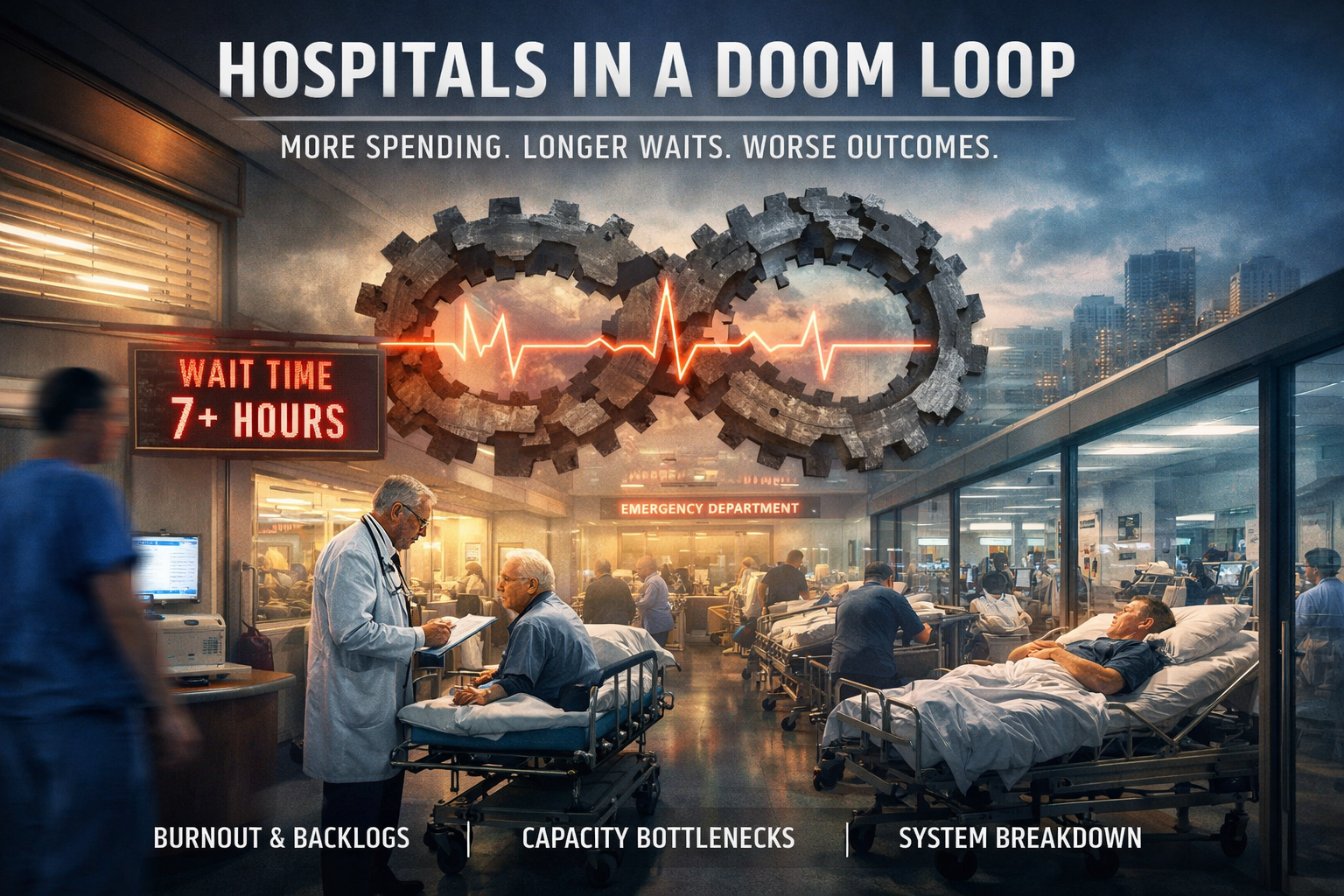
Hospitals in a Doom Loop: Why Healthcare Is Slowing Down as Spending Rises
Hospitals are spending more and staffing more, yet moving patients slower than ever. The issue isn’t resources. It’s broken flow. As delays compound and patient complexity rises, healthcare systems are trapped in a self-reinforcing loop that funding alone can’t fix.
Hospitals are doing more than ever and getting less done.
Spending is up. Staffing levels have increased. Technology investment has never been higher. Yet patients are waiting longer, outcomes are slipping, and frontline staff feel like they are moving slower, not faster.
A recent analysis from The Economist puts a name to what many operators already know: hospitals are stuck in a self-reinforcing loop that is degrading performance instead of improving it.
The Shift No One Reversed
The healthcare system did not recover from the pandemic. It adapted to dysfunction.
During COVID, hospitals were forced into reactive mode. Elective procedures stopped. Throughput collapsed. Backlogs built. Staff stretched beyond sustainable limits.
That was expected.
What wasn’t expected is that the system never returned to baseline. The temporary state became permanent.
Patients came back sicker. Staffing came back less experienced. Processes came back slower.
And the system locked into a new equilibrium.
A worse one.
The Loop That Is Breaking Hospitals
The problem is not isolated. It compounds.
Patients wait longer to be seen.
Longer waits mean more advanced illness.
More advanced illness requires longer, more complex care.
Longer care blocks beds and staff.
Blocked capacity increases wait times again.
This is not congestion. It is a feedback loop.
Hospitals are no longer dealing with volume spikes. They are operating inside a system that continuously manufactures delay.
Why More Money Made It Worse
The instinctive response has been to add resources.
More staff. More funding. More capacity.
But output has not followed.
Because healthcare is no longer constrained by inputs. It is constrained by flow.
Adding staff into a slowed system does not increase throughput. It often reduces it. Newer clinicians require more coordination. Decision-making slows. Variability increases.
At the same time, every patient now consumes more time.
Deferred care during the pandemic created a wave of higher-acuity cases. Chronic illness is rising. Aging populations are increasing demand intensity, not just demand volume.
So even as staffing numbers rise, effective capacity falls.
More people. Less movement.
The Flow Problem No One Owns
Hospitals are not failing on the inside. They are failing at the edges.
A patient who cannot access primary care shows up in the emergency department.
A patient who cannot be discharged stays in a hospital bed.
A patient who needs post-acute care waits because no placement exists.
Every breakdown outside the hospital becomes a bottleneck inside it.
Beds turn into holding areas. Emergency departments turn into queues. Clinicians spend time managing movement instead of delivering care.
What looks like a hospital problem is actually a system problem.
But no one owns the system.
Technology Didn’t Solve It
The industry invested billions into platforms like Epic and Cerner.
Data is everywhere.
But movement is not.
Most systems were built to document care, not accelerate it. They capture information but do not coordinate action in real time. They add visibility without removing friction.
The result is a paradox.
More data. Slower decisions. Lower throughput.
What This Actually Means
Healthcare is not collapsing from lack of investment.
It is stalling from lack of coordination.
Until systems are redesigned around flow, nothing else scales. Not staffing. Not funding. Not technology.
The organizations that break this loop will not be the ones that spend more.
They will be the ones that move faster.
Because in the current environment, speed is capacity.
And right now, capacity is the one thing healthcare no longer controls.