

HEALTHCARE IT NEWS & BLOG
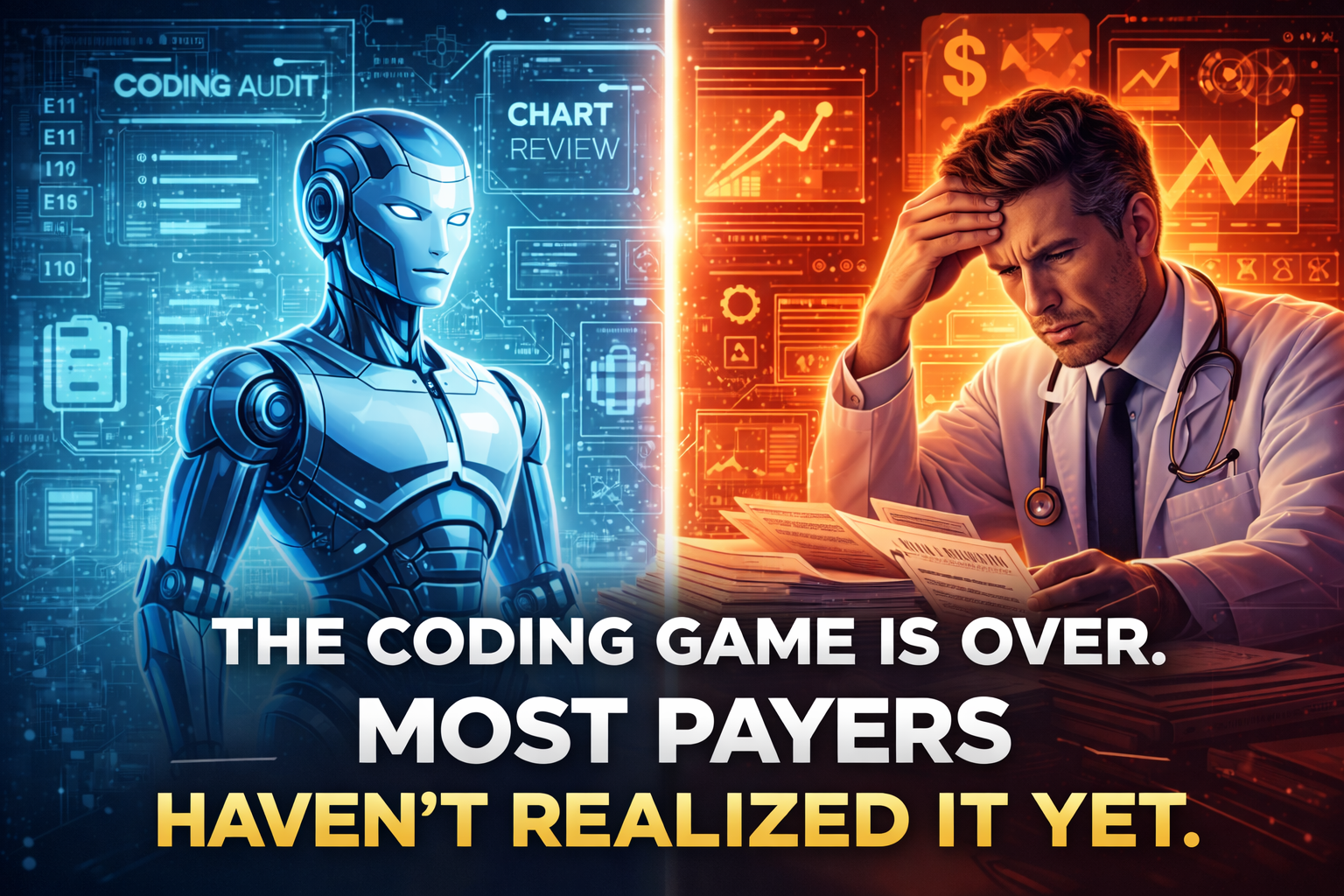
The Coding Game Is Over. Most Payers Haven’t Realized It Yet.
For years, payer growth was driven by how well risk was documented, not how well it was managed. That model is breaking. As pressure builds from regulators, rising costs, and outcomes, coding is no longer the strategy, it is the baseline. The real shift is underway, and it forces a harder question: can payers move beyond capturing risk and actually change it?
For years, payers found a reliable way to grow.
Document more.
Code better.
Capture more risk.
It worked so well that entire operating models were built around it. Vendors scaled. Teams expanded. Technology followed.
Revenue didn’t just come from managing health.
It came from how well you described it.
That model is now breaking.
And most organizations are still playing by the old rules.
What’s changed isn’t subtle.
Oversight on risk adjustment is tightening.
Payment pressure is increasing.
Medical costs are accelerating faster than premium growth.
The result is simple.
You can’t code your way to growth anymore.
This is where the disconnect starts.
Most payer organizations are still optimized for documentation, not outcomes.
They are built around:
Retrospective chart reviews
Coding audits and vendor programs
Documentation capture strategies
All of it designed to make sure nothing is missed.
But nothing about that model actually improves the health of a member.
It just improves how the condition is recorded.
That distinction didn’t matter as much before.
Now it does.
Because growth is shifting.
Not from how well you capture risk.
But from how well you manage it.
And that’s a completely different capability.
It requires identifying risk earlier.
Intervening in real time.
Closing care gaps before they turn into cost.
That’s not a coding function.
That’s operational execution.
Here’s the problem.
You can’t take a system designed to look backward
and expect it to perform looking forward.
The workflows don’t match.
The incentives don’t align.
The infrastructure isn’t there.
And yet, many plans are still trying to stretch documentation engines into clinical ones.
At the same time, the economics are shifting underneath them.
The return on coding optimization is shrinking.
The cost of poor outcomes is rising.
Avoidable admissions.
Chronic disease mismanagement.
Member churn tied to experience.
These aren’t side issues anymore.
They are margin drivers.
This is the part most organizations are underestimating.
Coding is no longer the strategy.
It’s the baseline.
Everyone is expected to get it right.
No one is going to win because of it.
The winners will be the plans that move first.
The ones that shift from retrospective capture
to proactive intervention.
The ones that stop asking, “Did we document it?”
and start asking, “Did we change it?”
Most payer organizations won’t make this shift quickly.
Not because they don’t understand it.
But because their entire operating model is built for something else.
And that’s where the opportunity sits.
The coding game isn’t evolving.
It’s ending.
The only question is how long it takes before your organization realizes it.
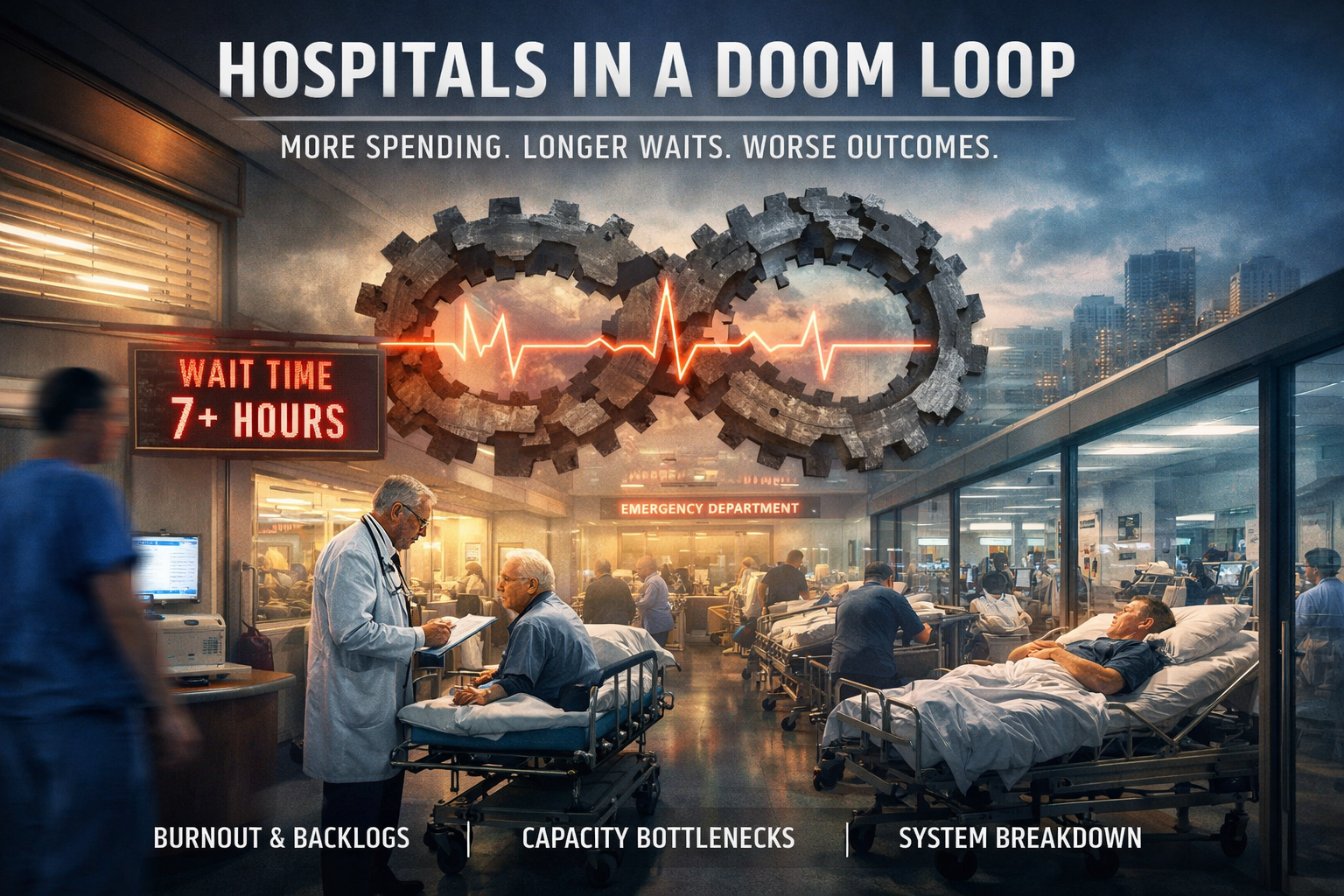
Hospitals in a Doom Loop: Why Healthcare Is Slowing Down as Spending Rises
Hospitals are spending more and staffing more, yet moving patients slower than ever. The issue isn’t resources. It’s broken flow. As delays compound and patient complexity rises, healthcare systems are trapped in a self-reinforcing loop that funding alone can’t fix.
Hospitals are doing more than ever and getting less done.
Spending is up. Staffing levels have increased. Technology investment has never been higher. Yet patients are waiting longer, outcomes are slipping, and frontline staff feel like they are moving slower, not faster.
A recent analysis from The Economist puts a name to what many operators already know: hospitals are stuck in a self-reinforcing loop that is degrading performance instead of improving it.
The Shift No One Reversed
The healthcare system did not recover from the pandemic. It adapted to dysfunction.
During COVID, hospitals were forced into reactive mode. Elective procedures stopped. Throughput collapsed. Backlogs built. Staff stretched beyond sustainable limits.
That was expected.
What wasn’t expected is that the system never returned to baseline. The temporary state became permanent.
Patients came back sicker. Staffing came back less experienced. Processes came back slower.
And the system locked into a new equilibrium.
A worse one.
The Loop That Is Breaking Hospitals
The problem is not isolated. It compounds.
Patients wait longer to be seen.
Longer waits mean more advanced illness.
More advanced illness requires longer, more complex care.
Longer care blocks beds and staff.
Blocked capacity increases wait times again.
This is not congestion. It is a feedback loop.
Hospitals are no longer dealing with volume spikes. They are operating inside a system that continuously manufactures delay.
Why More Money Made It Worse
The instinctive response has been to add resources.
More staff. More funding. More capacity.
But output has not followed.
Because healthcare is no longer constrained by inputs. It is constrained by flow.
Adding staff into a slowed system does not increase throughput. It often reduces it. Newer clinicians require more coordination. Decision-making slows. Variability increases.
At the same time, every patient now consumes more time.
Deferred care during the pandemic created a wave of higher-acuity cases. Chronic illness is rising. Aging populations are increasing demand intensity, not just demand volume.
So even as staffing numbers rise, effective capacity falls.
More people. Less movement.
The Flow Problem No One Owns
Hospitals are not failing on the inside. They are failing at the edges.
A patient who cannot access primary care shows up in the emergency department.
A patient who cannot be discharged stays in a hospital bed.
A patient who needs post-acute care waits because no placement exists.
Every breakdown outside the hospital becomes a bottleneck inside it.
Beds turn into holding areas. Emergency departments turn into queues. Clinicians spend time managing movement instead of delivering care.
What looks like a hospital problem is actually a system problem.
But no one owns the system.
Technology Didn’t Solve It
The industry invested billions into platforms like Epic and Cerner.
Data is everywhere.
But movement is not.
Most systems were built to document care, not accelerate it. They capture information but do not coordinate action in real time. They add visibility without removing friction.
The result is a paradox.
More data. Slower decisions. Lower throughput.
What This Actually Means
Healthcare is not collapsing from lack of investment.
It is stalling from lack of coordination.
Until systems are redesigned around flow, nothing else scales. Not staffing. Not funding. Not technology.
The organizations that break this loop will not be the ones that spend more.
They will be the ones that move faster.
Because in the current environment, speed is capacity.
And right now, capacity is the one thing healthcare no longer controls.

How Healthcare Can Prep for Artificial Intelligence, Machine Learning
Artificial intelligence and machine learning are on the brink of becoming major forces in the healthcare industry. How can providers start to prepare?
The term “artificial intelligence” often conjures up visions of apocalyptic landscapes decimated by hyper-intelligent machines with a penchant for destroying societies foolish enough to place their trust in autonomous robots and android workers.
While this bleak vision of the future is still firmly in the realm of science fiction novels and summer blockbuster movies, recent advances in artificial intelligence (AI) and machine learning are leaving some to wonder if Isaac Asimov’s Three Laws of Robotics are going to become applicable to everyday life sooner rather than later.
Self-driving cars, implantable medical devices, the ubiquity of smartphones and wearables, the first hints of programs that can beat the Turing test, and the financial incentive to drive automation into every imaginable business process are all bringing excitement and optimism – and more than a little trepidation – to developers across every economic sector.
The healthcare industry represents a particularly significant opportunity for machine learning to prove its value. The sheer volume of available medical knowledge has long since outstripped even the most intelligent clinician, requiring supercomputers just to keep up with the latest best practices and big data breakthroughs in genomics, predictive analytics, population health management, and clinical decision support.
Machine learning, natural language processing (NLP), and artificial intelligence are quickly becoming foundational components of the quest to keep ahead of the data tsunami while adhering to the most important law for robots and human healthcare practitioners alike: first, do no harm.
How are these tools already helping providers to produce better outcomes for patients, how will they evolve in the near future, and what steps should the industry take to integrate AI into the care process without fearing a disastrous big data backlash?
HOW DOES ARTIFICIAL INTELLIGENCE WORK?
We may not be living in the Matrix just yet (probably), but artificial intelligence is starting to become a familiar concept to most of the modern world.
On a basic level, artificial intelligence can be defined as the ability of a computer to independently solve problems that they have not been explicitly programmed to address. Machine learning algorithms drive a computer’s “thoughts” by providing a conceptual framework for processing input and making decisions based on that data.
An artificially intelligent machine needs to be able to accept information about the problem from its surroundings, generate a list of actions that it could take, and maximize its chance of achieving its goals by using logic and probability to choose the activities with the highest likelihood of success.
The learning happens when the program reabsorbs its past experiences and uses that data to inform future actions. Doing this allows the AI program to prioritize the choices that result in success more often, heightening its probability of getting the right answer.
For example, a computer may be given two sets of MRI images: one set that clearly shows a variety of brain tumors, and one that does not. By breaking down these images into machine-readable patterns, the computer can understand which patterns are likely to indicate a brain tumor and which represent healthy patients.
When fed a new batch of images that may or may not contain tumors, the computer should be able to use that initial reference data to identify patterns that are similar to known positive diagnoses.
Every time it makes an incorrect diagnosis, validated by a human clinician, it “learns” to adjust its criteria a little bit more by using the previous experience to inform its future decision-making. Eventually, it should become accurate enough to present trusted results to the user.
Humans complete these types of tasks almost without thought every moment of every day, but few algorithms are sophisticated enough to effectively mimic our natural capacity to process external input, extrapolate unspoken information from a query, use logic and reason to make a decision, and predict the likely outcomes of each action before they occur.
However, there are a few examples of projects that are coming close to beating the Turing test, opening up nearly unlimited applications for AI tools in the healthcare industry, not to mention in society at large.
Top 4 Basics to Know about Semantic Computing in Healthcare
What is the Role of Natural Language Processing in Healthcare?
WHAT ARE THE USE CASES FOR ARTIFICIALLY INTELLIGENT TECHNOLOGIES IN HEALTHCARE?
Almost every aspect of healthcare could, theoretically, benefit from an AI approach.
Computers don’t forget what they have learned, making them perfect helpers for the biggest of big data analytics projects like personalized medicine based on genomics and clinical decision support for complex conditions like cancer.
They don’t have inherent biases, so they are more likely to produce objective diagnoses unclouded by preconceived socioeconomic notions about the patient, which can produce disparities in care.
They can recognize shifts and patterns in data more quickly and comprehensively than most humans, so they may be able to predict conditions like sepsis before the patient even starts to feel ill.
Some of the most promising use cases for AI tools include predictive analytics, precision medicine, and clinical decision support. Development in all of these areas is already well underway.
IBM Watson Health is probably the most well-known name in cognitive computing at the moment, although it isn’t the only player in the field. Watson got an early start in the healthcare industry using its natural language processing and semantic computing abilities to train in clinical decision support at some of the top organizations in the country.
After ingesting millions of pages of academic literature and other healthcare data, the system can help providers make decisions by offering a series of suggestions along with confidence intervals that show how applicable the course of action may be. The higher the number, the more certain Watson is that a particular drug, therapy, or diagnosis is the way to go.
"Healthcare is going to be one of those industries that is elevated and made better by machine learning and artificial intelligence."
IBM has been steeping Watson in healthcare data for several years, and has shelled out billions of dollars to acquire big data analytics companies that will further its goal of creating a truly intelligent partner for quality care.
Watson has its competitors in the clinical decision support space, however, and IBM isn’t the only one taking an AI approach to curing cancer. Microsoft is also ramping up its efforts to apply advanced machine learning algorithms to the mysteries of human biology.
“One approach is rooted in the idea that cancer and other biological processes are information processing systems,” the company said in a recent exploration of the topic. “Using that approach the tools that are used to model and reason about computational processes – such as programming languages, compilers and model checkers – are used to model and reason about biological processes.”
“Researchers can apply techniques such as machine learning to the plethora of biological data that has suddenly become available, and use those sophisticated analysis tools to better understand and treat cancer.”
Artificial intelligence may be a welcome addition to the patient engagement and monitoring arenas, as well.
As healthcare organizations start to focus on customer expectations in response to rising out-of-pocket costs and value-based reimbursements, providers will need to learn how to personalize the patient experience, reduce unnecessary expenditures, and maintain open lines of communication between office visits to keep patients as healthy as possible.
Consumers are already familiar with voice-response phone menus and automated website chat bots that can answer questions or make connections with varying degrees of success, but healthcare may be in store for a much more robust AI experience, if Amazon CEO Jeff Bezos successfully shepherds Alexa to the bigtime.
Amazon’s take on AI is based on its Echo devices, which can help to create a smart home environment by using voice recognition to activate its omnipresent Alexa personal assistant. In a talk at the Vanity Fair New Establishment Summit, Bezos hinted that Amazon may be eyeing the healthcare industry in the near future.
“I think healthcare is going to be one of those industries that is elevated and made better by machine learning and artificial intelligence,” he said, according to an article on GeekWire. “And I actually think Echo and Alexa do have a role to play in that.”
“We’re working on having a vision in that arena because I do think it would be very helpful. … The medical care system is so big, no one company can do this. It has to be that you provide tools, and then hospitals and doctors and nurses and so on use those tools to improve healthcare.”
How Alexa will improve the healthcare experience remains to be seen, but it’s possible that the hospitals of the future will have an AI listening device in every patient room, replacing the nurse call systems, physician pagers, and overhead PA announcements of yore with an intelligent, unobtrusive, and responsive communication system.
Remote patient monitoring could also benefit from an artificial intelligence program taking on the task of coordinating Internet of Things equipment in the home for elderly, disabled, or frail patients. The extra help could make patients less reliant on caregivers for routine tasks like turning on the lights, calling the pharmacy for a prescription refill, sending data to providers from internet-enabled home health devices, or even ordering an Uber to get to their next doctor’s appointment.
And since AI entities like Alexa can learn about the habits and patterns of their users, patients with high needs in the home may find their lives significantly simplified and streamlined, making it easier to access care and adhere to treatment regimens.
Machine Learning, Artificial Intelligence Gain Healthcare Momentum
Cognitive Computing Leaders Think Time is Right for Healthcare
WHAT CAN HEALTHCARE ORGANIZATIONS DO TO PREPARE FOR AI AND MACHINE LEARNING?
Not every AI application will come from a Silicon Valley tech giant, however. Many healthcare organizations are already working on developing their own intelligent big data analytics systems based on machine learning principles.
Semantic data lakes are one entry point into what may eventually become artificial intelligence, and they are already finding a foothold in healthcare.
In contrast to traditional relational databases, a data lake system doesn’t have to be targeted to a specific use case, explained Parsa Mirhaji, MD, PhD, Associate Professor of Systems and Computational Biology and the Director of Clinical Research Informatics at the Albert Einstein College of Medicine and Montefiore Medical Center-Institute for Clinical Translational Research.
“Relational databases require a very fine structure that you have to plan out before you can use it - you have to frame your problems in a very specific way,” he said to HealthITAnalytics.com in 2015.
“Within that frame, you can do wonderful things, but you have to pre-coordinate your schema before you start investing in application development and data management.”
“The problem with that is that you have to predict all future-use cases,” he continued. “And the costs of changing your mind or your requirements are huge. And that's why you end up with these data silos. You end up with different architectures for different problems, because you have to box the problem before you begin.”
Data lakes, on the other hand, store many different types of information in their original formats in a single repository. Each piece of data is tagged with a unique standardized identifier, which allows the system to mix and match unrelated packets of information to generate new insights.
Using natural language processing to understand complex, free-form queries from the front end, data lakes can provide answers to questions and understand relationships that have not been explicitly programmed into the system at the start.
“You don’t have to predict the future,” said Mirhaji. “You can start from where you are, from exactly where you are, based on the kinds of needs that you have right now with the confidence that it will grow into the dimensions and directions as your organization wants to grow.”
Montefiore Medical Center, Partners HealthCare, and the American Society of Clinical Oncology’s CancerLinQ are just a few examples of healthcare-focused projects employing machine learning and semantic computing techniques to build semantic computing systems that can support collaborative research, predictive analytics, clinical decision support – and perhaps eventually transition into what could be considered artificial intelligence.
“There’s no room anymore for inconsistent quality and inconsistent data.”
Preparing healthcare data for the expansion of semantic computing is not going to be easy. Many providers are still struggling to understand how big data fits into routine care tasks, how to choose products and services that support advanced analytics, how to generate clean, complete, accurate, and timely data, and why big data is so critical for population health management, value-based care, and other upcoming challenges.
But even if a particular organization has no immediate plans to jump into a big data lake, they should consider developing the analytics competencies to get ready for a future where every piece of information about a patient can be used, in some way, to improve the quality of their care.
The process starts with understanding the importance of information governance and creating an environment of trust from the first moment data is created.
“There’s no room anymore for inconsistent quality and inconsistent data,” said Ann Chenoweth, MBA, RHIA, FAHIMA, President and Chair Elect of the 2017 AHIMA Board of Directors.
“Trusted data must be reliable, accurate, and accessible, where and when it’s needed. It’s not the data that comes out of here verses the other system. It has to be an enterprise-wide framework that you can rely on. Having that integrity and governance around the data is key.”
AHIMA’s principles of information governance stress the role of data integrity – a key concept for analytics – by urging providers to develop clear, consistent, and standardized policies and procedures for creating and managing data.
“Reliability of information is of paramount importance in the delivery of healthcare services,” AHIMA says. “Based on the nature and type of healthcare organization, measures to ensure reliability of data and information should be built in to processes and systems for creation and capture, processing, and other applicable stages of the information’s lifecycle.”
These processes may include:
- Educating clinicians and other data-creators about the importance of information governance across the organization
- Improving the quality of data at the source with clinical documentation improvement initiatives
- Investing in open, standards-based data warehousing infrastructure that prevents the development of data siloes
- Ensuring that all data assets include appropriate metadata to improve accountability and extend the usability of datasets
- Maintaining high standards of data privacy and security to protect patients from unauthorized uses of information
A firm foundation of governance will help healthcare organizations understand just how much data they have, how useful it is for advanced analytics, and what use cases it can help to address.
Before investing in semantic computing, machine learning, or artificial intelligence technologies, providers should have a clear, concrete idea of how they will use these tools to improve care quality, outcomes, or efficiencies.
Analytics leaders should work with clinical and executive staff to identify pain points and specific opportunities for improvement, such as a lack of visibility into the diabetic patient population, the need to boost performance on clinical quality metrics related to value-based contracts, or a desire to improve revenue collection by engaging patients with the highest out-of-pocket costs.
When searching for vendors offering data-driven solutions for these specific problems, providers may wish to look for products that are easily scalable, based on emerging healthcare data standards, easily integrated into existing infrastructure, and are able to maximize the value of historical data stores.
The Difference Between Big Data and Smart Data in Healthcare
How to Choose the Right Healthcare Big Data Analytics Tools
Blockchain, IoT, Artificial Intelligence Poised to Shake Up Healthcare
CONTRIBUTING TO THE FUTURE OF ARTIFICIAL INTELLIGENCE IN HEALTHCARE
It may still take a few years before clinicians can sit back and relax while their robot assistants take a crack at diagnosing their patients, but the development of artificial intelligence is moving quickly enough to warrant a serious discussion about how these technologies will impact society in the near future.
The White House is already thinking about how to address issues of safety, regulation, fairness and security as AI systems move from laboratories to real-world settings.
A report from the Executive Office of the President National Science and the Technology Council Committee on Technology notes that AI has the potential to contribute significantly to the public good, but that “an AI-enabled world demands a data-literate citizenry that is able to read, use, interpret, and communicate about data, and participate in policy debates about matters affected by AI.”
As the healthcare industry continues to develop its own data literacy and adopt technologies that may be the precursors to true AI, it must take on a greater role in these conversations.
“The best way to build capacity for addressing the longer-term speculative risks is to attack the less extreme risks already seen today."
Patient privacy and safety are likely to be most pressing near-term issues. Artificial intelligence will play a major role in automating tasks that are currently conducted by human decision-makers. Automation requires the free flow of data across disparate systems, which will in turn rely on refined and strengthened protocols for obtaining patient permissions to share and use data for multiple applications.
Providers will also need to discuss issues of accountability when an AI program makes a mistake that results in patient harm, how to gauge and manage risk when introducing AI to a new task, and how to safely test novel technologies in the healthcare setting without exposing patients to potentially dangerous situations.
“The best way to build capacity for addressing the longer-term speculative risks is to attack the less extreme risks already seen today, such as current security, privacy, and safety risks, while investing in research on longer-term capabilities and how their challenges might be managed,” the White House suggests, reinforcing the idea that addressing issues of information governance, patient privacy, and provider workflows as soon as possible will prepare healthcare for an AI-driven future.
“As the technology of AI continues to develop, practitioners must ensure that AI-enabled systems are governable; that they are open, transparent, and understandable; that they can work effectively with people; and that their operation will remain consistent with human values and aspirations,” the report continues. “Researchers and practitioners have increased their attention to these challenges, and should continue to focus on them.”
“Developing and studying machine intelligence can help us better understand and appreciate our human intelligence. Used thoughtfully, AI can augment our intelligence, helping us chart a better and wiser path forward.”

7,000+ people affected in New York hospital data breach: 4 things to know
At least 7,000 medical records from New York City-based Bronx-Lebanon Hospital Center were exposed by a third-party vendor, NBC News reports.
Here are four things to know.
1. A team of security researchers at MacKeeper Security Research Center discovered the breach earlier this month. Researcher Bob Diachenko told NBC News private patient information was viewable online due to a misconfigured backup server hosted by iHealth, a records management technology provider.
2. The exposed patient information included names, home addresses and medical diagnoses — along with addiction histories, mental health diagnoses, HIV statuses and sexual assault reports — of patients who visited the hospital between 2014 and 2017. Mr. Diachenko told NBC News it's unclear how long patient records were viewable online.
3.iHealth told NBC News it conducted an internal review upon learning of the breach. The vendor said one unauthorized person accessed the data, although there is no evidence that data has been misused.
"While iHealth continues to work with a leading IT security firm to validate its analysis, at this time, iHealth believes that the issue has been contained," iHealth told NBC News.
4. Bronx-Lebanon Hospital Center confirmed the exposed patient records in an emailed statement to NBC News and said it is cooperating with law enforcement agencies to address the breach.

Epic, Cerner hold 50% of hospital EHR market share: 8 things to know
In 2016, Epic and Cerner led the EHR market space for acute care hospitals in the United States, with Meditech following close behind, according to the new KLAS US Hospital EMR Market Share 2017.
The data in this study is based on acute care EMR purchasing activity that occurred in the United States from Jan. 1 to Dec. 31, 2016.
Here are eight things to know:
1. Epic held 25.8 percent of the U.S. acute care hospital market share, with Cerner (24.6 percent) and Meditech (16.6 percent) coming in a close second and third.
2. All other EHR vendors held 10 percent or less of the market share.
3. Thirteen of 23 contracts for integrated delivery networks (multi-hospital organizations) went to Epic.
4. Small community hospitals — with less than 200 beds — drove EHR purchasing decisions in 2016, accounting for 80 percent of all hospital EHR decisions in the country.
5. The increase in EHR adoption by small hospitals was fueled by the community-specific platforms from Cerner and Epic; acquisition and EHR-standardization activity of larger organizations; as well as an increased interest in athenahealth's new offering.
6. However, customers did complain about the lack of customization capabilities in both Epic and Cerner platforms.
7. While Cerner proved to be the most popular vendor among small hospitals in 2016, athenahealth grew the most.
8. The number of hospitals that contracted with athenahealth more than doubled in 2016, and one-third of the new hospitals included more than 25 beds.

Cerber overthrows Locky as top ransomware menace
Ransomware continues to be the most heavily used malware by hackers, with more invasive methods on the horizon, a new report from Malwarebytes revealed.
Cerber, one of the most successful ransomware variants, was first seen in the wild with a new loader capable of evading detection from machine learning tools during March. And now it seems Cerber has overthrown 2016’s menace: Locky.
Specifically, Cerber accounts for 90 percent of all ransomware infections, a recent Malwarebytes report found. An influx of new Cerber versions released in 2017 have made the variant the most popular - and successful on the market.
In addition, Cerber adopted the Ransomware-as-service model, meaning distribution is rapidly expanding through multiple dark web actors and groups.
"It's spread is largely because the creators have not only developed a superior ransomware with military-grade encryption, offline encrypting and a slew of new features, but by also making it very easy for non-technical criminals to get their hands on a customized version of the ransomware," the report authors wrote.
Ransomware found its sweet spot in healthcare last year, with hackers using Locky to target the industry with massive phishing campaigns in August. Although multitudes of ransomware variants are available, Locky was the most popular in 2016 for its success rates and sophistication. It also can’t be decrypted without keys.
After a massive surge in Locky attacks in November, however, the virus quickly faded, the report found, but healthcare security professionals should know that ransomware has thus far continued proliferating in 2017 and ranks as the most heavily utilized type of malware used by hackers.
Further, organizations can expect an increase in the development of malware that targets both Mac and Windows systems, which includes evolved delivery, social engineering and spam methods, the report found.
“Targeted malspam has primarily been a Windows problem to date,” the authors wrote. “But the reemergence of Microsoft Office macro malware capable of affecting Macs may change this. Many of these malicious documents include code capable of detecting whether it is running on a Windows or Mac system and taking action appropriate to the system to infect it.”
Top 10 Steps to Health IT Implementation and Long-term Success
With this many factors and technical details to manage, it’s easy to forget the fundamentals.
Successful implementation of information technologies in a clinical environment often involves dozens of key stakeholders, hundreds of clinical and technical considerations, and thousands of end-users. With this many factors and technical details to manage, it’s easy to forget the fundamentals. From articulating a clear vision for your organization, to tracking the right metrics, to prioritizing training and education, it can be difficult to know just where to begin. To help you with the process, here are 10 steps to health IT implementation and long-term success.
- Create a culture of collaboration and partnership. Ensure that each member of the vendor and customer teams understands that both parties will either succeed or fail together. In a culture of cooperation and shared priorities, the vendor helps the customer reach the highest level of success, and the customer helps the vendor earn the highest reputation for the work they do.
- Clearly identify key leaders. One of the most important investments any healthcare organization can make is in its leadership team. The customer team members must include (at the very least) an administrative champion, physician champion, and technical champion.
- Select and empower a physician champion. Formally select a qualified physician champion based on his/her excellent communication/teaching skills, commitment to the mission, and leadership capability.
- Document team mission, vision, and values. Have all team members contribute to and sign-off on these foundational documents. Together, they will help to establish the direction, priorities, and guiding principles that will keep everyone on task and on the same page.
- Establish rules for communication and decision-making. Set a rule from the outset that all communications are shared among key stakeholders. Document each implementation task, assign a responsible owner, and create a due date to ensure that each person is accountable and appreciates that an incomplete task means a project delay.
- Establish clear objectives, success measures, and timelines. Success often requires changes in technology, processes, and personnel. Start by identifying important benchmarks and metrics that best match your values and project domain.
- Training. A training team should be established at the start of the project, including a lead trainer from the vendor, the physician champion, and other appropriate customer personnel. And remember, training is an ongoing process. It doesn’t end upon implementation.
- Standardize implementation to boost quality and efficiency. Do what works and use those learned capabilities as you move through your implementation.
- Agree on white-glove inspection requirements. Clearly delineate the system and personnel tests that must be completed before you go live and before you complete on-site training. For example, set up a checklist that specifies pre-golive system validation testing, including best practice default configurations, master-file setup, and emergency procedures.
- Measure, compare to benchmarks, and market the benefits. Use technology and the patient visit to communicate with your patient population and continuously solicit their feedback. Applicable technology may include your patient portal, your website, or patient hand-outs. Similarly, let your referring staff and contracted payers understand and appreciate your achievements. Don’t be afraid to make bold claims now that you have the data to back them up.